
Chickpea Tempeh







Produced by Greek, organic chickpeas
Fit with a slight savory, sweet or sweet and sour flavors
Holds its shape during cooking
Match the Greek gastronomy and stews
Replace the white meat
Soft and αμυλώδης texture
The Chickpea Tempeh by Peaceby Peas, is a unique product that combines the tradition of south-east Asia, with traditional Greek raw materials.
The chickpeas give a special aroma in Tempeh, a sweeter aftertaste, starchy and tight texture. Visually, it does not differ particularly from Soy Tempeh. It stands out for its full of flavour, the variety of applications in the kitchen, and the high content of protein, fiber, and probiotics.
In a pan, pot or in the oven ChickpeaTempe is capable to become the star in all your culinary explorations. It will definitely give another dimension to the use of chickpeas!
Features/Benefits
Tempeh has generally been studied for its nutritional benefits and its contribution to good health. The Chickpea Tempeh, compared with the Soy Tempeh has a milder flavor, some sweetness, lacking the taste of a pe. The texture is firm tight, more “granular” and starchy than the Soy one.
How is Tempeh produced
The Tempeh chickpea is produced with a natural and traditional process of fermentation, which includes whole, shelled chickpeas and a fungus (Rhizopus Oligosporous).
Chickpeas cook in water with organic apple cider vinegar, and then mixed with the fungus, before being inserted in an incubator to be fermented for 36 to 42 hours. During thisprocess, the chickpeas are tied in a block, due to the white mycelium that forms around them, as a result of the fermentation with the fungus.
Preservation and handling
Soy Tempeh by Peace by Peas is a non-pasteurized product, vacuum-packed and sold frozen to maintain a longer duration of shelf life. In the freezer it can be stored for up to 9 months from the production date. If thawed (needs 1-2 hours) and remains in its closed bag, it can be kept in the refrigerator and consumed within 15 days.
From the moment you open the bag, you may keep it in a refrigerator and consume it within 6-7 days.
As time goes on, especially if you have in the fridge, you may notice that:
the color changes from white to yellow and later to brown
it could develop black spots, which are the spores of the fungus Rhizopus.
This is happening because it is a live product and the fermentation continues. The micro-organisms continue to mature and differentiate the color, the texture and the taste of Tempeh.
Don't worry about these phenomena, it is aesthetic in nature and is completely safe to consume Tempeh with black spots!
Nutritional Benefits
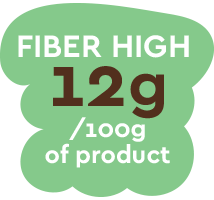
Due to the high bioavailability of its proteins, Chickpea Tempeh is an excellent source of plant protein, and fiber. It is low in fat and cholesterol and is an ideal choice for vegetarian, vegan and flexitarian consumers.
As a product of fermentation, compared with raw chickpeas, has almost no anti-nutrient ingredients, which makes ChickpeaTempeh highly digestible and its nutrients more absorbable[1]
The very process of fermentation, creates such conditions that provide:
- Bioavailable protein
Fermentation converts proteins into amino acids, making them more readily absorbable by the body. Content: 11.3 gr of protein per. 100g of product = (women 24%, men 20% of the RDA, approximately) - Easy digestion
Provides more nourishment, reducing anti-nutrients (trypsin inhibitor, phytic acid) that make pulses indigestible and bind nutrients from foods. - Source of isoflavones, plant phyto-estrogens
Isoflavones are phytochemicals compounds (phytoestrogens) that provide a lot of health benefits and help to prevent several diseases. They are found in soybeans, chickpeas, and other legumes.
They reduce the risk of cancer cells growth. - Improve bone health, reducing the osteopenia and the loss of calcium.
- Relieves the symptoms of menopause, replacing the loss of estrogen that create the symptoms.
- Reduce cholesterol, through their antioxidant action.
- Probiotic action, which is derived from the fermentation process.
Probiotic bacteria protect the body as a whole (more effective immune system, a healthy gut, assimilation of food and nutrients, anti-inflammatory action, etc), contributing in a healthy microbiome and acting against pathogens such as salmonella and E. coli.
They give us energy and good nerve function. The provision in B vitamins, enhance nerve function, digestion and absorption of nutrients, the formation of blood and the conversion of food into energy.
Using Tempeh
Chickpea Tempeh fits ideally in Mediterranean dishes and traditional Greek recipes. Replace any animal protein, especially white meat, in casserole dishes, recipes with sauce/gravy, deep-fried, in salads, pasta, rice, buffet style ca.
It has the capacity to absorb the flavors of marinades and assimilate the flavors from the seasonings which you wish to use.
Simply replace a piece of white meat with Tempeh chickpea and cook the same way, as you would in your meat recipe!
Experiment with new marinades, as a spicy mexican Chimichurri sauce, or a combination of spices of the Middle East (cumin, coriander, paprika, pepper, sumac, oregano, salt), pan fry in oil, quench with wine and vinegar, cook down the liquids.
Try it and in a braised roast instead of chicken, in a tomato stew, or just experiment with its endless possibilities.
| Eνέργεια Kcal/100g | 132,78 kcal |
| Υδατάνθρακες g/100g | 14,3 g |
| Λιπαρά, εκ των οποίων g/100g | 3,42 g |
| εκ των οποίων σάκχαρα g/100g | 4,98 g |
| Κεκορεσμένα g/100g | 1,38 g |
| Φυτικές ίνες g/100g | 12,1 g |
| Μονοακόρεστα g/100g | – |
| Πρωτεΐνες g/100g | 11,2 g |
| Πολυακόρεστα g/100g | – |
| Αλάτι g/100g | 0,38 g |